
Postcard from the USA
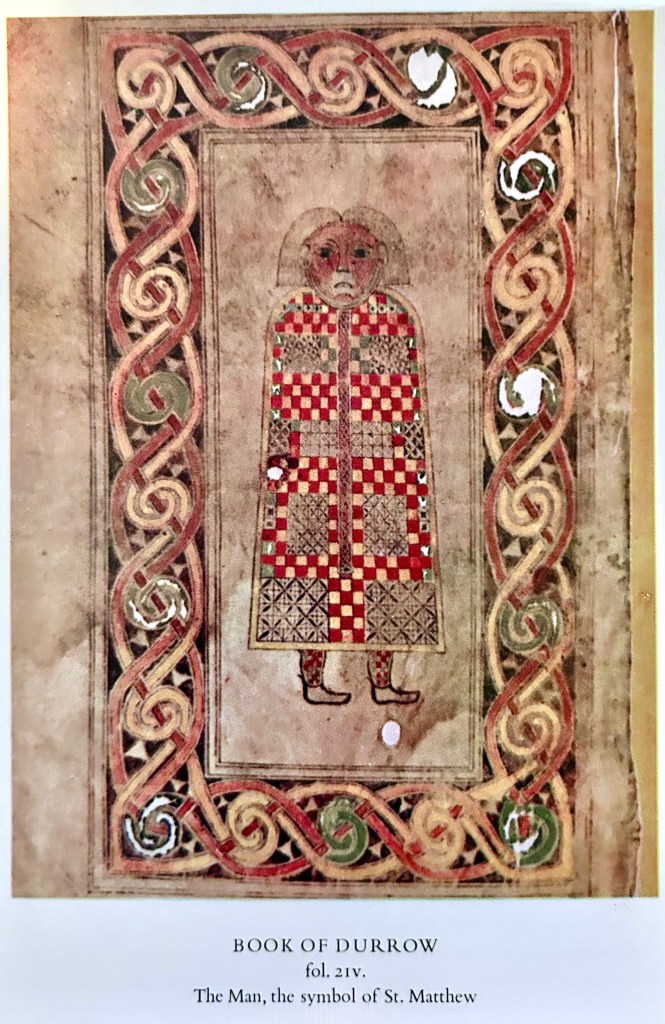
- The manuscript is a premier example of “Insular art” (or Hiberno-Saxon art), characterized by a fusion of Celtic, Germanic, and Roman influences.
- The Book of Durrow (c. 650–700) is interesting as it presents the four Evangelists in a different way from how the Book of Kells would 100 years later. In the Book of Kells, the four Evangelists (Matthew, Mark, Luke, and John) are represented by the symbols of man, lion, calf, and eagle, respectively, in accordance with the Latin Vulgate version of the gospels prepared by St Jerome in the late fourth century CE. The Book of Durrow, however, follows the pre-Vulgate version, in which the lion represents John and the eagle, Mark.
- As with any book or object that is 1,300 years old, the Book of Durrow’s survival is truly remarkable.
- The original manuscript is part of the collection at Trinity College Library in Dublin, Ireland.
St. Matthew, also known as Levi, was one of the twelve apostles of Jesus and is traditionally recognized as the author of the first Gospel, making him one of the four Evangelists. Originally a tax collector in Capernaum, he left his profession immediately upon being called by Jesus.
He is the patron saint of bankers, accountants, bookkeepers, security guards, and tax collectors.
He is often symbolized by a winged man or angel in Christian art, representing the humanity of Jesus highlighted in his Gospel.
The Gospel of Matthew was written primarily for a Jewish audience to show that Jesus is the promised Messiah.
Traditions regarding his later life vary; he is believed to have preached in Persia, Ethiopia, or Parthia, with some accounts suggesting he died a martyr’s death.
His feast is on September 21.
[source: Wikipedia]


It is impressive it has survived!
LikeLike
It is!!!
>
LikeLike