
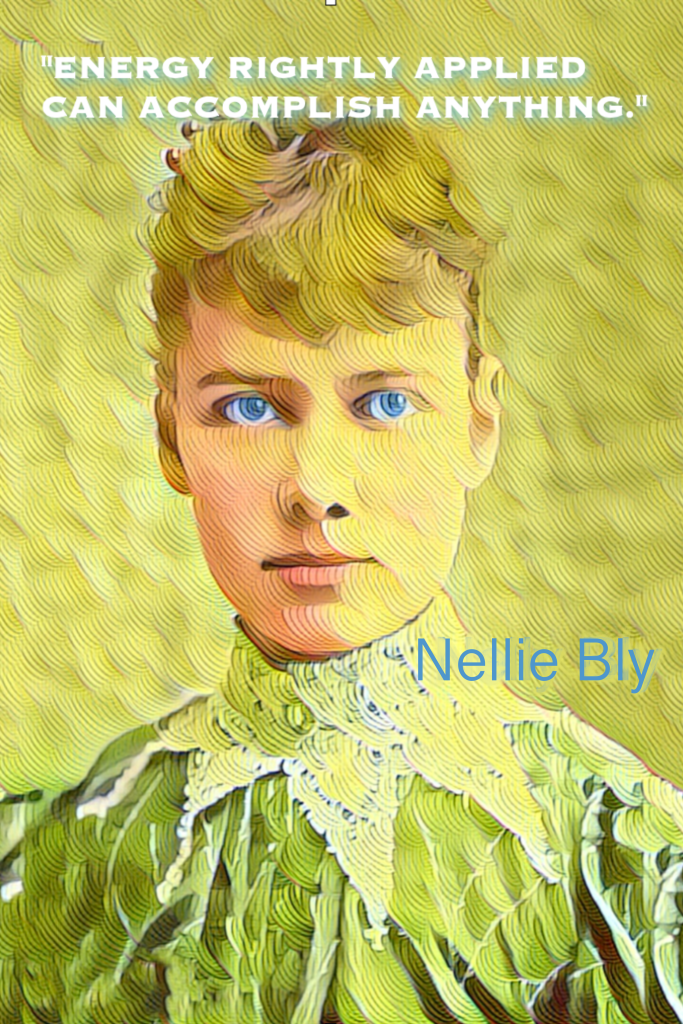
Nellie Bly basically set the standard for investigative journalism. At a time when women writers were confined to the society pages, Bly tackled more serious topics like mental health, poverty, and corruption in politics. She’s most famous for going undercover at the insane asylum on Blackwell’s (now Roosevelt) Island. Her exposé on the horrific conditions brought about much-needed changes to patient care.
She also set the world record for circumnavigating the world. She completed the feat in just 72 days in 1889-1890, alone with just a Gladstone bag.
Born in 1864, Bly was the thirteenth of 15 children in a family headed by Michael Cochran, a mill owner and county judge. She was six years old when her beloved father died without warning, and without a will, plunging his once wealthy and respected family into poverty and shame.
She was born Elizabeth Jane Cochran, but at the age of 15, this aspiring teenager added an e to the end of her last name to make it more distinctive. Her nom de plume, ‘Nelly Bly’ was chosen by her first editor who borrowed it from an American minstrel song.
Bly launched her career by writing an anonymous letter to a Pittsburgh newspaper after reading an article that dismissed women’s roles to childbearing and housekeeping. Impressed by her letter, the editor offered her a job, and she became a journalist.
Bly reported from the Eastern Front during World War I, becoming one of the first women and foreigners to cover the war zone and facing risks like being arrested as a suspected spy.
After marrying industrialist Robert Seaman, Bly became a leader in industry and obtained patents for two inventions: a stacking garbage can and a new type of milk can.
Bly’s reporting and writings championed women’s rights, and she covered the 1913 Women’s Suffrage Procession in Washington, D.C.
Linked to April Blogging from A to Z Challenge


Marina, never heard of her before but I will not forget her after reading this. Have you heard of Elizabeth Packard? Kate Moore wrote a book about her: The Woman They Could Not Silence.
LikeLike
I will check her out!!!
>
LikeLiked by 1 person
An amazing woman!
Lisa
LikeLike
What an inspirational woman, Marina. Thank you for bringing her to light.
LikeLike